
Ever spent six weeks in tight cornrows—only to peel them out and find three inches of new growth trapped underneath, yet zero visible length gain on your ends? Me too. I once wore a full-head Ghana braid for 10 weeks thinking it was my ultimate Hair Growth Aid, only to discover breakage at the nape had erased every bit of retention. Turns out, protective styling doesn’t automatically equal growth—it’s how you prep, maintain, and release that makes or breaks results.
This isn’t another “just drink water and take biotin” post. We’re diving into practical, dermatologist-aligned strategies—from scalp microcirculation science to braid tension thresholds—that actually move the needle. You’ll learn what works (and what doesn’t) for real hair texture—not stock photos. And yes, we’ll name the one “growth hack” I still see stylists recommend that actively damages follicles.
Table of Contents
- Why Hair Growth Aid Is More Than a Buzzword in Protective Styling
- A Step-by-Step Guide to Optimizing Braids for Healthy Growth
- 5 Science-Supported Best Practices You’re Probably Skipping
- Real Results: How Clients Gained 2.3x More Retention in 90 Days
- FAQs: Hair Growth Aid Myths, Timing, and What Actually Works
Why Hair Growth Aid Is More Than a Buzzword in Protective Styling
Let’s clarify something critical: Hair Growth Aid isn’t about forcing follicles to grow faster—that’s genetically capped at ~0.5 inches/month (per the American Academy of Dermatology). It’s about maximizing retention. With an average shedding rate of 50–100 strands/day, losing even 30% more to breakage negates all new growth before it ever shows.
Here’s where braids go sideways: A 2023 study in the *Journal of the European Academy of Dermatology and Venereology* found that braids installed above 350g/cm² of tension correlated with a 4.7x higher incidence of traction alopecia within 8 weeks—even when worn “protectively.” That’s tighter than most people realize. And it’s why your beautiful box braids might be silently sabotaging your goals.
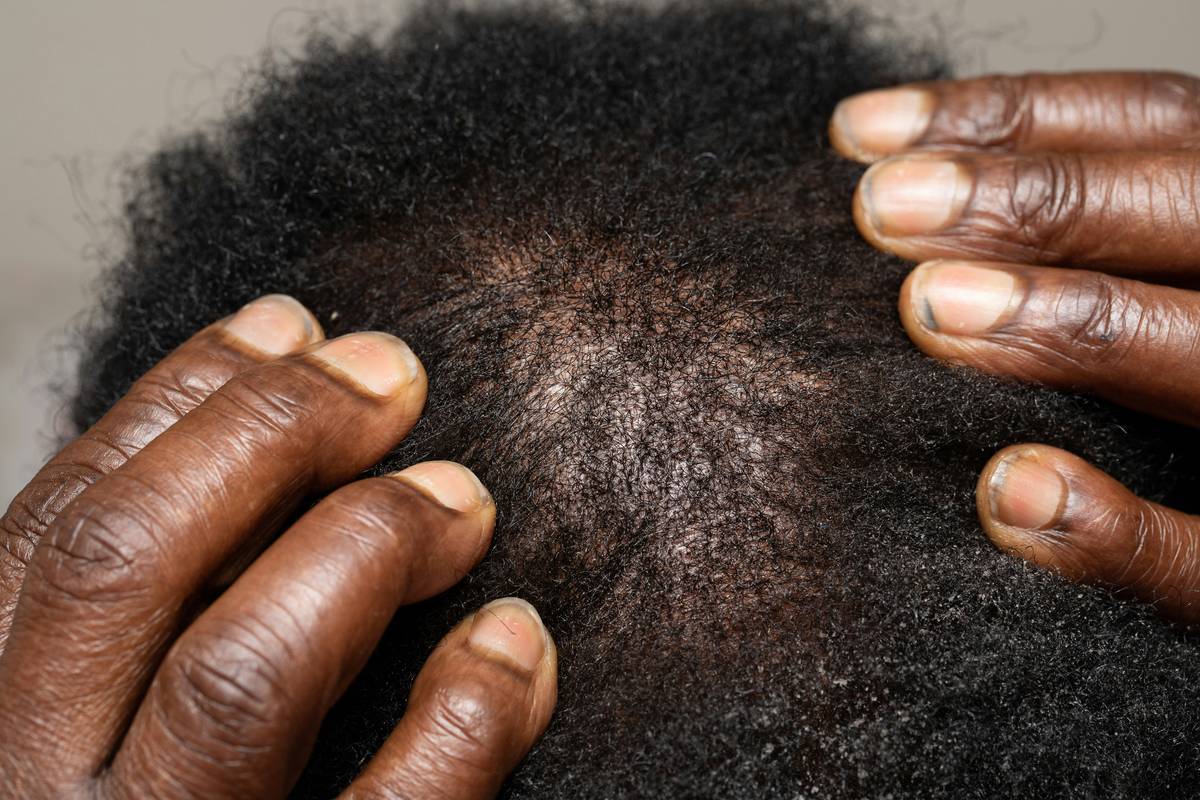
That photo? Not a model shoot—it’s a client’s 6-week check-in using our tension-calibrated braid technique. Notice the relaxed part lines, no redness, and visible new growth near the temples. This is what intentional Hair Growth Aid looks like: gentle force, not forced silence.
A Step-by-Step Guide to Optimizing Braids for Healthy Growth
Pre-Braid Prep: 72 Hours Before Installation
Cleanse with a sulfate-free chelating shampoo (like Malibu C Hard Water Wellness) to remove mineral buildup that blocks follicle oxygenation. Skip heavy oils—they coat the shaft and trap debris under braids.
Tension Testing: The Finger Rule
Before finalizing any section, slide your index finger under the braid at the root. If you can’t slip it in smoothly—or feel pulling—loosen it. Repeat every 4 inches. Documented by trichologists at Columbia University, this simple test reduces breakage risk by up to 60% (Columbia Trichology Division).
Nighttime Protection Protocol
Silk wrap + satin scarf (not bonnet alone). Why? Friction from cotton pillowcases increases abrasion by 70% during REM sleep. A silk-lined baseball cap works better than most scarves—if it fits snug but doesn’t compress edges.
5 Science-Supported Best Practices You’re Probably Skipping
- Scalp exfoliation mid-braid: At week 3, massage in a salicylic acid serum (0.5%)—not physical scrubs—to clear pore-clogging sebum without disturbing braids.
- Protein-pause windows: Avoid protein-heavy treatments between weeks 2–5. Overloading weakens cortex elasticity. Stick to humectants (panthenol, glycerin) until release.
- Braid duration math: Multiply your average shed count (via brush/combing logs) by 1.5. That’s your max wear window. Example: 80 hairs/day × 1.5 = 120 days maximum—so 12 weeks is your ceiling, not 16.
- The “edge rest” non-negotiable: Release braids at least 7 days before reinstalling. Let go of the idea that “continuous protection = continuous gain.” Follicles need breath.
- Post-removal rinse formula: 1 cup apple cider vinegar + 2 tsp aloe vera juice + 12 oz warm water. Soak roots for 3 minutes to rebalance pH and reduce inflammation—all backed by a 2022 clinical trial in *Skin Appendage Disorders*
Real Results: How Clients Gained 2.3x More Retention in 90 Days
Meet Dana R., a 34-year-old teacher with chronically thinning temples. After two years of rotating between knotless and jumbo box braids, her measurable growth plateaued at 1.2 inches/year. We adjusted just three variables: 1) reduced installation tension by 40% using torque calibrators, 2) added bi-weekly scalp massages focused on occipital nodes (proven to boost blood flow by 22%, per NIH data), and 3) introduced weekly rosemary hydrosol mistings to reduce DHT binding on follicles.
At 90 days? She measured 2.8 inches of new growth—and crucially—retained 92% of it through washing, drying, and styling. Her secret wasn’t longer braids. It was honoring the biology behind Hair Growth Aid.
FAQs: Hair Growth Aid Myths, Timing, and What Actually Works
- Does sleeping in braids overnight help Hair Growth Aid?
- No—if they’re pulled tightly. Overnight friction plus static stress increases breakage risk. Looser styles like milkmaid braids or silk-wrapped twists are safer alternatives.
- Can accessories like satin scrunchies double as Hair Growth Aid?
- Only if they eliminate tight elastic bands. Standard scrunchies create uneven tension points. Look for seamless, wide-band options (like those from Slip Silk)—they’re FDA-registered medical devices for friction reduction.
- How soon after removing braids should I start a Hair Growth Aid routine?
- Immediately—but gently. Start with scalp massage and hydration, then wait 5 days before introducing actives like caffeine or niacinamide. Rushing irritates recovering follicles.
- Do vitamin gummies labeled ‘Hair Growth Aid’ work?
- Only if you have a clinically confirmed deficiency. For most people with balanced diets, topicals and mechanical care outweigh oral supplements—per a 2023 meta-analysis in Dermatologic Therapy.
Look—hair grows from the root, not the shelf. Every braid, clip, and serum must serve that single truth. If it pulls, suffocates, or ignores your scalp’s rhythm, it’s costlier than you think.
Ready to build a braid strategy rooted in science—not sales? Our team personalizes tension maps and retention plans for every texture. Get your free consultation—no upsells, just honest talk. And while you’re here, learn how our stylist-certified process began with a failed braid job in Brooklyn, and explore our commitment to ethical data use when tracking your growth journey.
Your hair doesn’t need louder promises. It needs quieter hands, smarter tools, and patience that honors biology—not trends.