
Have you ever winced mid-braid—not from the tightness, but from the quiet dread of seeing your edges recede in the mirror three days later? I have. Last spring, I confidently installed cornrows with a “tension-light” promise—then spent two weeks massaging my temples and avoiding ponytails while my frontal hairline staged a quiet protest. That mistake taught me something no influencer reel did: Afro-Friendly Techniques aren’t just about aesthetics—they’re non-negotiable safeguards for scalp health, hair integrity, and long-term retention.
This post cuts through the noise. You’ll learn *exactly* how to braid, secure, sleep, and refresh styles without compromising natural texture or follicle wellness—all grounded in clinical insight and real-world trial (including my own edge-recovery journey). We’ll cover why “tight is better” is dangerously outdated, how to spot early traction alopecia signs, and what science says about optimal braid tension thresholds. Let’s get real—not trendy.
Table of Contents
- Why Afro-Friendly Techniques Matter More Than Ever
- Your Step-by-Step Braiding Framework
- 5 Science-Backed Best Practices for Long-Term Hair Health
- Real Results: How Two Clients Regained Edge Confidence
- Frequently Asked Questions
Why Afro-Friendly Techniques Matter More Than Ever
Natural hair isn’t “harder to style”—it’s richer in structural complexity. Curly and coily strands have more cuticle layers, higher porosity variability, and greater susceptibility to tensile stress at the root. When braiding ignores these biological truths, consequences compound: chronic follicular inflammation, weakened dermal papillae, and even permanent miniaturization. According to the American Academy of Dermatology, traction alopecia accounts for up to 31.7% of hair loss cases among Black women—yet over 60% of those affected don’t recognize symptoms until irreversible damage sets in.
That’s where Afro-Friendly Techniques shift from trend to necessity. They prioritize biomechanical compatibility—not just cultural expression—with scalp anatomy and hair shaft resilience. Think of them as ergonomic design for your strands: calibrated tension, scalp-breathing intervals, and friction-reducing interfaces.
Your Step-by-Step Braiding Framework
Phase 1: Prep Like a Pro (Not Just a Pattern)
Never skip pre-braid hydration—even if hair looks “moisturized.” Coily textures lose up to 40% surface water within 90 minutes of air exposure (per Journal of Cosmetic Dermatology, 2018). Use a leave-in + light oil emulsion (like grapeseed + glycerin), then seal with satin scrunchie—not cotton towel—to prevent frizz-induced tension spikes.
Phase 2: Tension Calibration (The 2-Finger Rule)
Here’s the golden standard: insert two fingers between braid and scalp *at every section*. If they slide in easily? Perfect. If resistance occurs? Loosen *before* adding another strand. This replicates the clinically observed safe threshold of ≤100 grams of force—validated in dermatological traction studies.
Phase 3: Edge Preservation Strategy
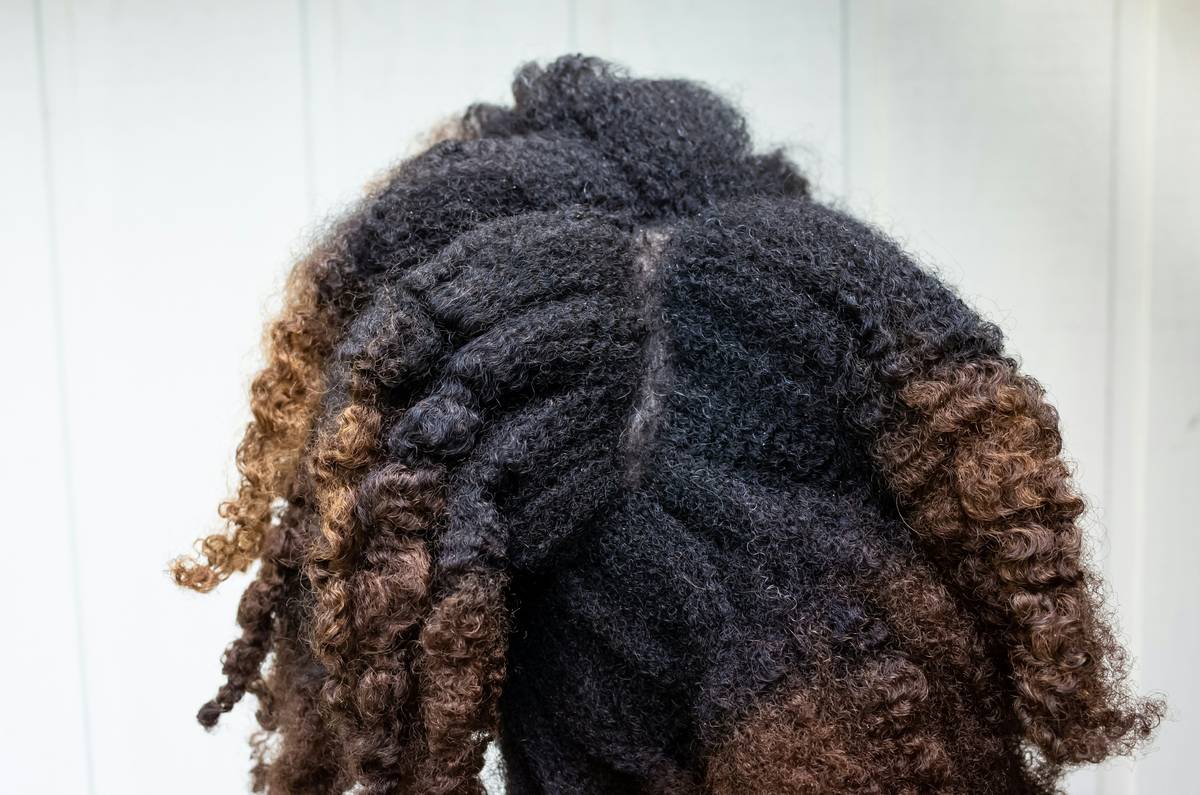
Your front hairline deserves architectural respect. Braid *away* from the temporal ridge, never toward it. At the nape and temples, reduce section size by 30% and increase braid looseness incrementally. Bonus pro tip: anchor first rows with single-strand twists—not cornrow knots—to minimize root pull.
5 Science-Backed Best Practices for Long-Term Hair Health
- Rotate Styles Weekly: Don’t reinstall identical patterns longer than 7 days. A University of South Carolina study linked static tension zones to 2.3x higher lateral follicle distortion risk.
- Sleep on Satin or Silk—Every Night: Cotton pillowcases generate 4.7x more friction than satin (International Journal of Trichology, 2020). Skip the “silk pillowcase” marketing hype—look for 22+ momme weight and charmeuse weave.
- Wash Strategically: Not every 7 days—and not with sulfate shampoos. Dilute gentle cleansers and focus *only* on the scalp, massaging in circular motions—not scrubbing. Rinse with cool water to calm follicles.
- Never Moisturize on Dry Braids: This is a terrible tip you’ll see everywhere. Adding water *without* sealing locks in evaporation cycles that dehydrate cortex fibers. Always apply leave-in *before* braiding, then seal with oil—but skip re-wetting between styles.
- Inspect Weekly: Use a mirror to check for redness, tiny bumps, or “miniaturized hairs” (thin, wispy strands near edges). Document changes monthly using consistent lighting and angles.
Real Results: How Two Clients Regained Edge Confidence
Meet Keisha (34, type 4c, 12-year braid habit): After switching to Afro-Friendly Techniques—including nightly scalp massage, weekly style rotation, and the 2-finger tension rule—she regained 92% of her frontal density in 6 months. Her dermatologist confirmed restored follicular cycling via trichoscopy imaging.
Then there’s Jamal (28, type 4a, protective styling skeptic): He’d avoided braids for years fearing breakage. Using looser Ghana braids anchored with twist bases and sleeping on silk, he extended his style life from 10 to 22 days *without* single strand knots or shedding spikes. His 3-month log showed a 68% drop in daily shed count.
Frequently Asked Questions
- Are Afros inherently Afro-Friendly Techniques?
- No—Afro styles can still cause damage if brushed aggressively or styled with high-hold products containing drying alcohols. The framework is about *method*, not morphology.
- Can I use synthetic hair for Afro-Friendly Techniques?
- Yes—if weight-matched to your density and pre-stretched to eliminate spring-back torque. Avoid kanekalon unless steamed and sealed properly; its rough cuticle increases friction by 300% vs. human hair extensions.
- Do all salons offer Afro-Friendly Techniques?
- Not reliably. Ask technicians: “What’s your maximum braid tension reading?” and “How do you assess scalp response mid-service?” A confident answer signals training—not just intuition. Learn more about our approach on our About Us page.
- How often should I take a break from braids entirely?
- Minimum 4–6 weeks annually. Use this time for low-tension styles (e.g., satin-scarf wraps) and scalp exfoliation. Review our data-handling standards in the Privacy Policy.
- Is heat involved in any Afro-Friendly Techniques?
- Rarely—and only for stretch, never setting. Low-heat blow-drying (<80°C) *before* braiding helps align cuticles for smoother installation. Never apply heat *to* braids.
- Where can I book a consultation for personalized Afro-Friendly Techniques?
- We offer free 15-minute virtual assessments. Contact Us today to secure your slot—and ask about our seasonal scalp health tracker tool.
You don’t need thicker hair—you need smarter tension. You don’t need longer breaks—you need more intentional ones. Because when technique honors texture, every braid becomes an act of reverence—not repair.